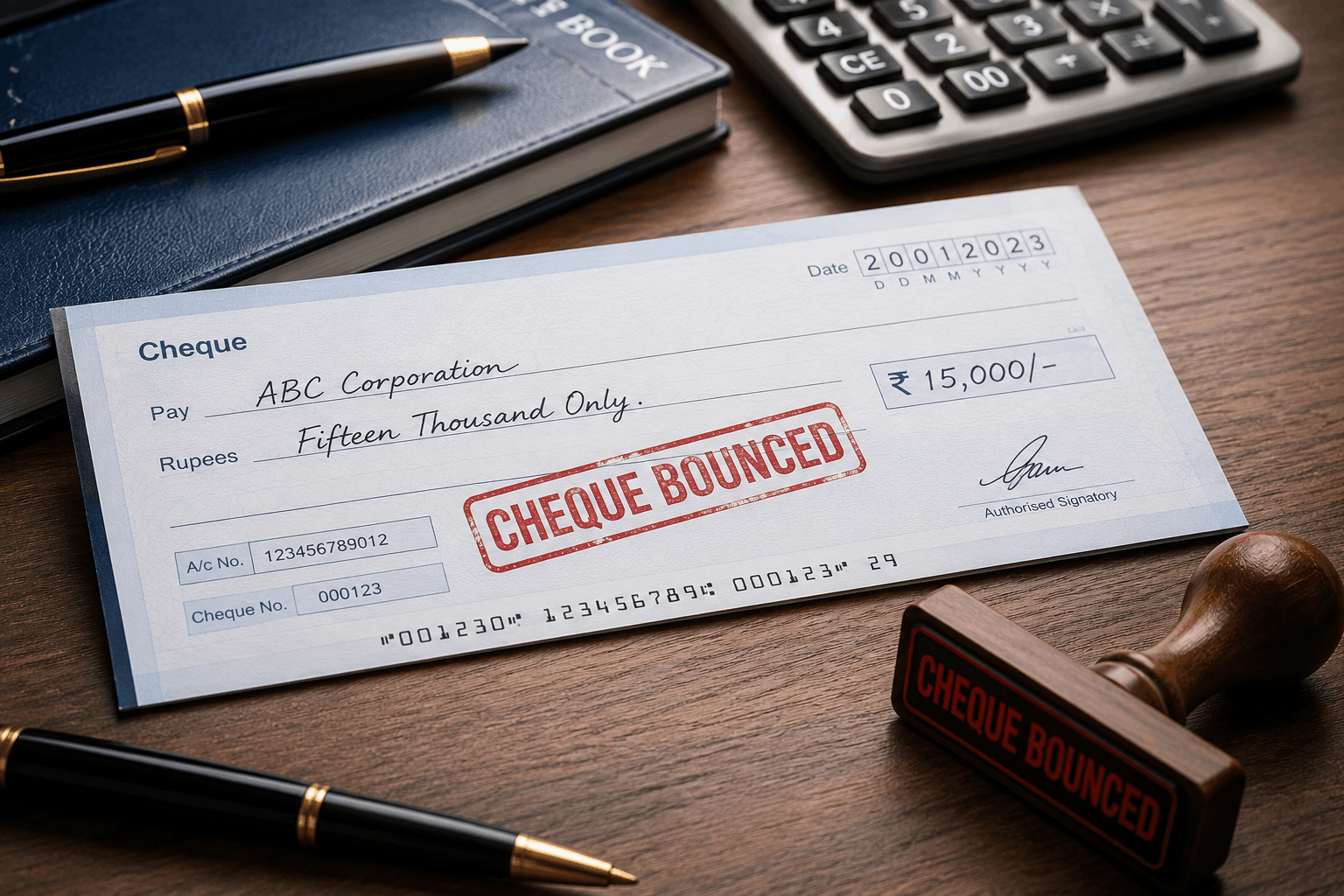
Cheque bounce cases have become one of the most significant financial and legal issues in India, particularly due to the widespread use of cheques in business transactions and personal dealings. A dishonored cheque not only affects the payee financially but also has serious legal consequences for the drawer under Section 138 of the Negotiable Instruments Act, 1881. With increasing awareness and stricter enforcement in 2026, understanding the rights, penalties, and legal remedies for cheque bounce is essential for both creditors and debtors. This authoritative guide provides practical insights into the law, step-by-step procedures, and effective legal strategies.
Understanding Cheque Bounce Under Indian Law
A cheque bounce occurs when a cheque issued by a drawer fails to get honored by the bank due to insufficient funds, signature mismatch, account closure, or other reasons. Section 138 of the Negotiable Instruments Act, 1881 specifically deals with criminal liability arising from dishonor of cheques.
Key Conditions for Section 138 Liability
-
Cheque must be issued for discharge of debt or liability – It should not be gratuitous.
-
Cheque must be presented within validity period – Usually within three months from the date of issuance or six months from the date on the cheque whichever is earlier.
-
Cheque must be dishonored due to insufficient funds – Other reasons such as stop payment also qualify in certain cases.
-
Notice requirement – Payee must send a written demand notice within 30 days of dishonor to the drawer.
Rights of the Payee (Creditor)
Payees have multiple rights under cheque bounce law:
-
Right to Receive Payment – The primary right is recovery of the cheque amount.
-
Right to Send Legal Notice – Section 138 requires sending a 15-day notice demanding payment.
-
Right to File Complaint – If the drawer fails to pay within 15 days, the payee can file a criminal complaint before a Magistrate.
-
Right to Claim Compensation – Courts may award additional compensation for losses or inconvenience caused.
Responsibilities and Defenses for Drawer (Debtor)
Drawers also have certain rights and potential defenses:
-
Honest Payment: Paying within 15 days of notice prevents criminal liability.
-
Valid Reasons: Legitimate reasons like stop payment due to a dispute or bank errors may be argued.
-
Dispute on Debt: If the cheque was issued under a genuine contractual dispute courts may consider it.
-
Technical Errors: Courts may excuse dishonor due to minor technicalities not amounting to fraud.
Step-by-Step Legal Procedure for Cheque Bounce Cases
Step 1: Issuance and Presentation of Cheque
The payee must ensure the cheque is properly drawn with:
-
Correct amount in words and figures
-
Correct date and signature
-
Payee name clearly mentioned
Present the cheque to the bank within the validity period.
Step 2: Cheque Dishonor and Bank Memo
If the cheque is dishonored, the bank issues a Cheque Return Memo stating the reason for dishonor. This memo is critical evidence for filing a Section 138 case.
Step 3: Sending Legal Notice
-
Payee must send a 15-day notice to the drawer after receiving the dishonor memo.
-
The notice should clearly state:
-
Cheque details (number, date, amount)
-
Reason for dishonor
-
Demand for immediate payment within 15 days
-
Courts strictly follow this statutory requirement. Failure to send notice may lead to rejection of the case.
Step 4: Filing Complaint in Court
If the drawer fails to pay within 15 days, the payee can file a criminal complaint under Section 138 IPC in the Magistrate Court having jurisdiction.
Key elements of the complaint:
-
Parties’ details
-
Cheque and bank details
-
Dishonor memo as evidence
-
Copy of legal notice
-
Amount claimed and any compensation
Step 5: Court Proceedings
The Magistrate examines the complaint and may:
-
Issue notice to the drawer
-
Allow for settlement outside court
-
Summon the drawer for trial
Defenses by Drawer:
-
Genuine dispute regarding debt
-
Payment made before notice
-
Bank error causing dishonor
Step 6: Judgment and Penalties
If the drawer is found guilty under Section 138 IPC, penalties may include:
-
Imprisonment: Up to 2 years
-
Fine: Up to twice the cheque amount
-
Compensation: Payment of cheque amount to the payee
Courts also encourage compounding of offense if parties reach settlement during proceedings.
Civil Remedies for Payee
Apart from criminal action, payees can also file a civil suit for:
-
Recovery of the cheque amount
-
Interest on the debt
-
Additional compensation for damages or loss
Civil remedies are especially useful when the drawer’s criminal liability is contested or delayed.
Practical Legal Insights for 2026
-
Always Keep Cheque Records: Maintain copies of cheques, bank statements and correspondence.
-
Send Notice Promptly: Delays in notice can invalidate your case.
-
Verify Bank Details: Ensure cheque is properly drawn and payable.
-
Consider Mediation: Courts encourage settlement between parties to avoid prolonged litigation.
-
Engage Experienced Lawyers: Proper drafting of notice and complaint is critical.
-
Digital Evidence Acceptance: Courts now accept scanned notices, email communications and digital bank records as evidence.
-
Act Within Statutory Period: Both criminal and civil claims have strict time limits.
Emerging Trends in Cheque Bounce Law
-
Courts are increasingly considering digital transactions and e-cheques.
-
Strict scrutiny of dishonor claims to prevent frivolous litigation.
-
Emphasis on early settlement and compounding to reduce burden on criminal courts.
-
Use of technology for court filing and notices, enhancing speed of proceedings.
-
Penalties for repeated cheque dishonorers are now more severe.
Conclusion
Cheque bounce cases under Section 138 of the Negotiable Instruments Act are a powerful tool for creditors to enforce payments. Timely legal action, compliance with statutory requirements, and proper documentation are crucial for a successful claim.
In 2026, the law continues to balance the interests of payees and drawers, emphasizing prompt payment, accountability, and the protection of business and personal transactions. Understanding the rights, penalties, and legal remedies ensures that individuals and businesses can recover dues efficiently while avoiding prolonged disputes and unnecessary arrests.
By following a step-by-step approach issuing notices, filing complaints, and pursuing civil remedies—payees can enforce their rights, while drawers can avoid criminal liability by complying with legal requirements promptly.