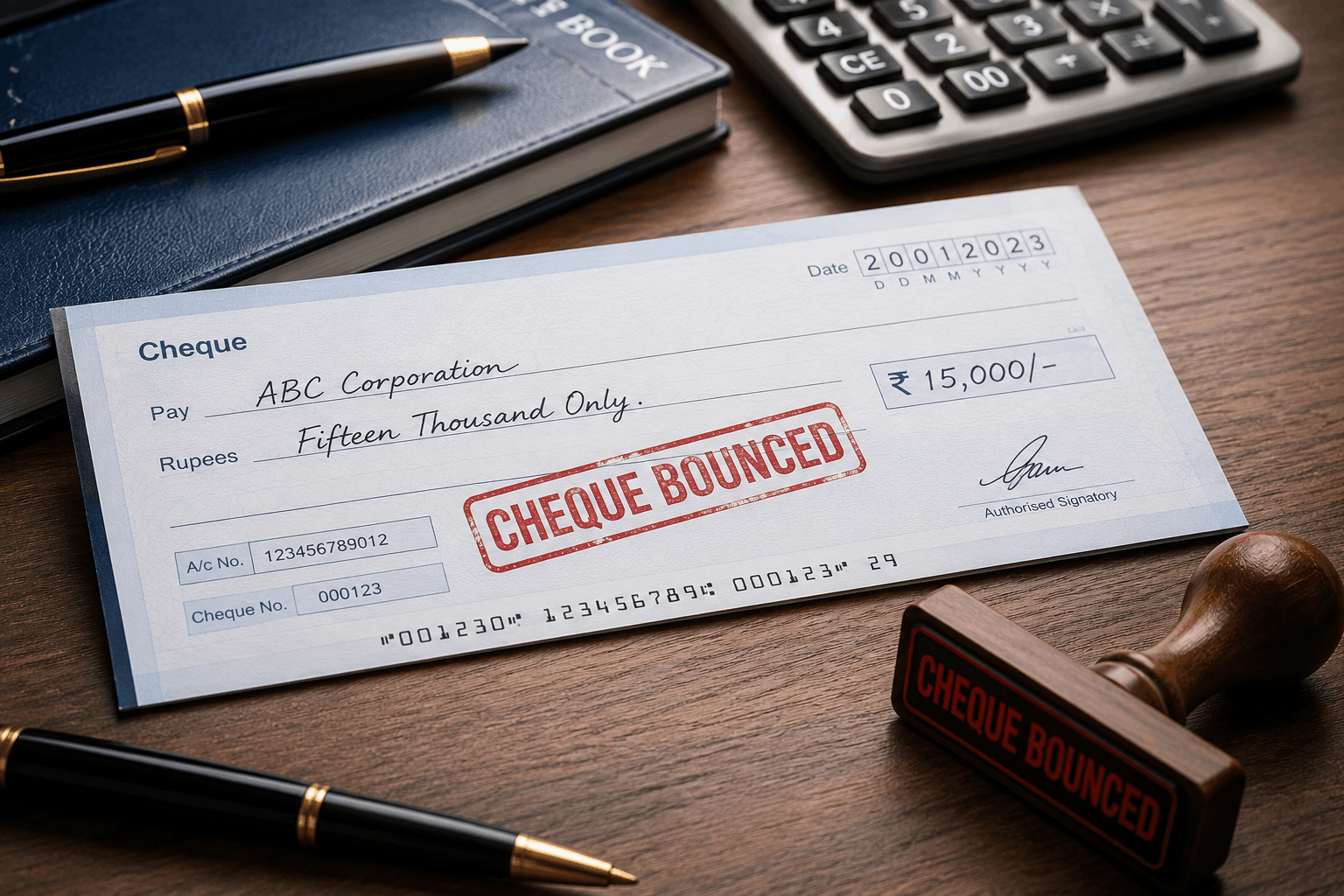
Cheque bounce cases are among the most common financial disputes in India, affecting individuals, businesses, and professionals alike. A cheque is considered a reliable mode of payment, but when it is dishonored by the bank due to insufficient funds or other reasons, it can lead to legal consequences under Indian law. The governing provision for cheque dishonor cases is Section 138 of the Negotiable Instruments Act, 1881 (NI Act). This guide explains everything you need to know about cheque bounce laws in India, including causes, legal procedure, penalties, and remedies.
What is a Cheque Bounce?
A cheque bounce occurs when a bank refuses to honor a cheque presented for payment. The bank issues a “cheque return memo” stating the reason for dishonor. Common reasons include insufficient funds, signature mismatch, overwriting, account closure, or stale cheque (expired validity).
When a cheque is issued for repayment of a legally enforceable debt or liability and it gets dishonored, legal action can be initiated under Section 138 of the NI Act.
Legal Framework: Section 138 of the NI Act
Section 138 makes cheque dishonor a criminal offence if certain conditions are met:
- The cheque must be issued for a legally enforceable debt or liability
- It must be presented within its validity period (usually 3 months from the date of issue)
- The cheque must be returned unpaid by the bank
- The payee must issue a legal demand notice within the prescribed time
- The drawer fails to make payment within 15 days of receiving the notice
If these conditions are satisfied, the payee can initiate legal proceedings against the drawer.
Essential Ingredients of a Cheque Bounce Case
To file a valid case under Section 138 NI Act, the following elements must exist:
- The cheque was issued towards a legally enforceable debt or liability
- The cheque was presented within its validity period
- The cheque was dishonored by the bank
- A legal notice demanding payment was sent within 30 days of dishonor
- The drawer failed to make payment within 15 days of receiving the notice
Failure to meet any of these conditions may weaken the case.
Step-by-Step Procedure in a Cheque Bounce Case
1. Cheque Presentation
The payee deposits the cheque in their bank within the validity period.
2. Cheque Dishonor
If the cheque bounces, the bank issues a return memo specifying the reason.
3. Sending Legal Notice
The payee must send a legal demand notice to the drawer within 30 days of receiving the dishonor memo. The notice demands payment of the cheque amount.
4. Waiting Period
The drawer has 15 days from receipt of the notice to make payment.
5. Filing a Complaint
If payment is not made within 15 days, the payee can file a complaint before the appropriate Magistrate Court within 30 days after the expiry of the notice period.
Punishment for Cheque Bounce
Under Section 138 NI Act, the accused may face:
- Imprisonment up to 2 years, or
- Fine up to twice the cheque amount, or
- Both imprisonment and fine
In most cases, courts also encourage settlement between parties to resolve disputes amicably.
Common Defenses in Cheque Bounce Cases
The accused may defend themselves by proving:
- The cheque was not issued for a legally enforceable debt
- The cheque was given as security and not for payment
- The cheque was stolen or misused
- There was no valid legal notice served
- The signature on the cheque is forged or mismatched
- The debt is time-barred
Proper documentation and evidence play a crucial role in defense.
Importance of Evidence
Evidence is critical in cheque bounce cases. The complainant must present:
- Original cheque
- Bank return memo
- Copy of legal notice
- Proof of delivery of notice (postal receipt, acknowledgment)
- Agreement or invoice showing the debt
- Any correspondence supporting the claim
Strong evidence increases the chances of a favorable judgment.
Jurisdiction of the Court
A cheque bounce case is generally filed in the court where:
- The bank of the payee (complainant) is located, or
- The branch where the cheque is deposited is situated
Recent amendments have clarified jurisdiction rules to avoid confusion and multiple filings.
Time Limit for Filing a Case
- Legal notice must be sent within 30 days of dishonor
- Complaint must be filed within 30 days after the expiry of the 15-day payment period
Delays may be condoned by the court in certain circumstances with valid reasons.
Settlement and Compounding of Offence
Cheque bounce cases are compoundable offences, meaning parties can settle the matter at any stage of litigation. Courts often encourage:
- Mutual settlement agreements
- Mediation or compromise between parties
- Payment of cheque amount with or without additional compensation
Once settled, the case can be withdrawn.
Practical Tips to Avoid Cheque Bounce Issues
- Always maintain sufficient balance before issuing a cheque
- Avoid overwriting or errors in cheque details
- Use post-dated cheques carefully
- Verify signatures and account details before issuing
- Keep records of all financial transactions
- Consider digital payment alternatives for large transactions
Conclusion
Cheque bounce cases under Section 138 of the NI Act serve as an important legal mechanism to ensure trust and accountability in financial transactions. Whether you are a payee seeking recovery or a drawer facing a complaint, understanding the legal process, timelines, and requirements is crucial. Proper compliance with procedural rules, supported by strong evidence, can significantly impact the outcome of the case.
Given the increasing number of cheque bounce disputes, awareness of legal rights and responsibilities helps individuals and businesses avoid unnecessary litigation and resolve disputes efficiently.