Cheque Bounce Legal Notice Format & Filing Procedure:
Cheque bounce cases are one of the most common financial disputes in India. Governed primarily under Section 138 of the Negotiable Instruments Act, 1881, cheque dishonour is treated as a criminal offense when certain legal conditions are met. Understanding the correct legal notice format and filing procedure is crucial for ensuring a successful claim.
In this complete guide, we will explain everything—from what a cheque bounce is, to how to draft a legal notice, and the step-by-step process to file a case.
What is a Cheque Bounce Case?
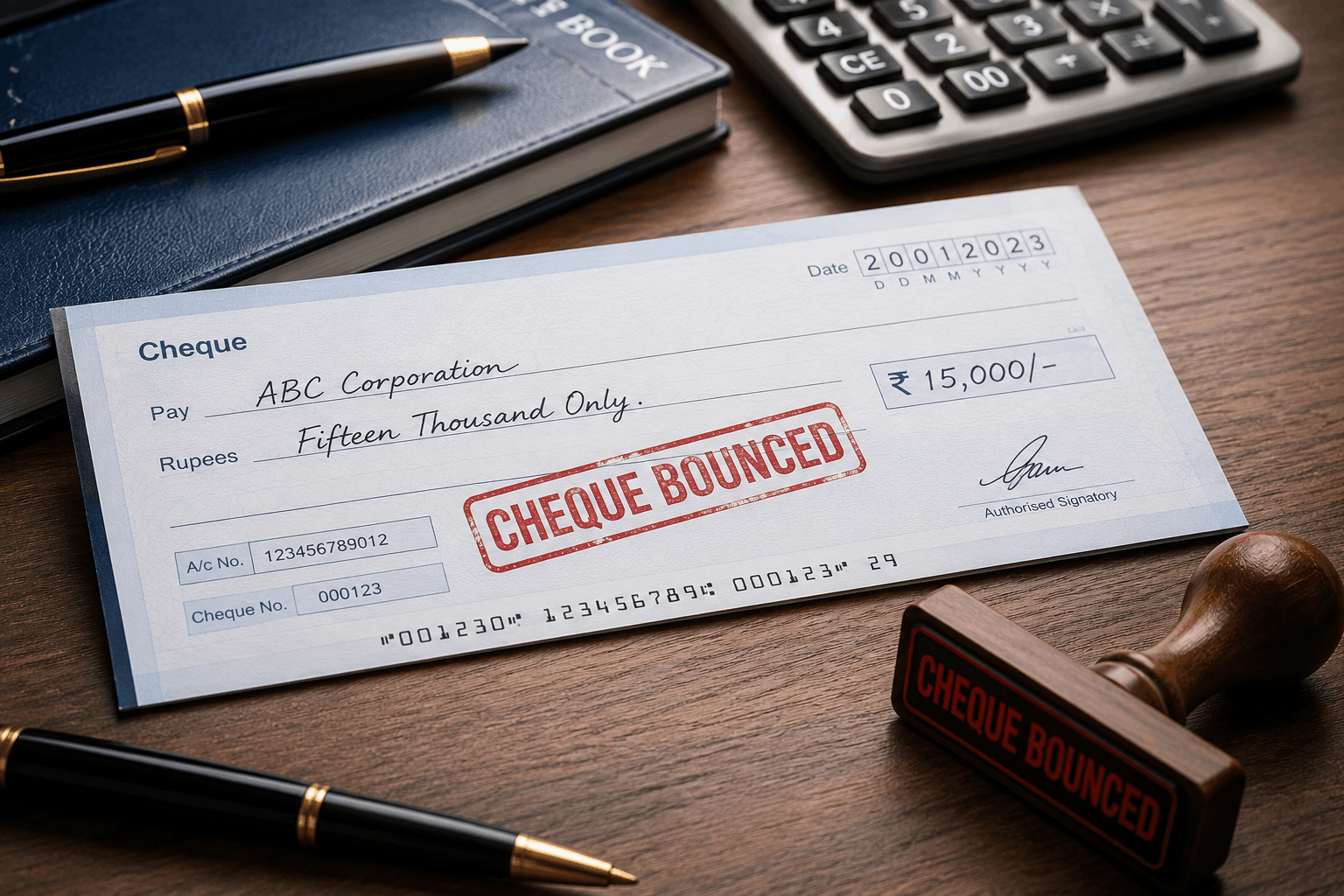
A cheque bounce occurs when a bank refuses to honour a cheque due to reasons such as:
- Insufficient funds in the account
- Signature mismatch
- Account closed
- Payment stopped by drawer
When a cheque is dishonoured, the payee (the person receiving payment) has the legal right to initiate action against the drawer (the issuer of the cheque).
Legal Framework: Section 138 of NI Act
Under Section 138, cheque bounce is a punishable offense if:
- The cheque is issued for a legally enforceable debt
- The cheque is presented within its validity period (usually 3 months)
- The cheque is returned unpaid
- A legal notice is sent within 30 days of dishonour
- The drawer fails to make payment within 15 days of receiving notice
Failure to comply allows the payee to file a criminal complaint.
Importance of Legal Notice in Cheque Bounce Cases
Sending a legal notice is mandatory before filing a case. Without it, the complaint may be rejected by the court.
A legal notice serves the following purposes:
- Gives the drawer a final chance to pay
- Acts as evidence in court
- Establishes intent and liability
Cheque Bounce Legal Notice Format
Below is a standard format you can follow:
LEGAL NOTICE
Date: [Insert Date]
To,
[Name of Drawer]
[Address]
Subject: Legal Notice under Section 138 of Negotiable Instruments Act for Dishonour of Cheque
Dear Sir/Madam,
Under instructions from my client [Your Name], I hereby serve you this legal notice:
- That you issued a cheque bearing number [Cheque Number] dated [Date] for ₹[Amount] drawn on [Bank Name].
- That the cheque was presented for encashment but was dishonoured due to [Reason].
- That the bank returned the cheque vide memo dated [Date].
- That the cheque was issued towards a legally enforceable debt/liability.
You are hereby called upon to make payment of ₹[Amount] within 15 days from the receipt of this notice.
Failing which, my client will initiate legal proceedings against you under Section 138 of the Negotiable Instruments Act at your risk, cost, and consequences.
Sincerely,
[Advocate Name]
[Signature]
Key Elements of a Valid Legal Notice
To ensure your notice is legally valid:
- Must be sent within 30 days of cheque dishonour
- Clearly mention cheque details (number, date, amount)
- Include bank memo details
- Demand payment within 15 days
- Be sent via registered post or courier
Step-by-Step Filing Procedure for Cheque Bounce Case
1. Cheque Presentation
The cheque must be presented within its validity (3 months).
2. Dishonour by Bank
If the cheque is dishonoured, the bank issues a return memo stating the reason.
3. Send Legal Notice
Within 30 days of receiving the return memo, send a legal notice to the drawer.
4. Wait for 15 Days
The drawer is given 15 days to make payment.
5. Filing the Complaint
If payment is not made, file a complaint within 30 days after the 15-day period expires.
Where to File the Case?
The complaint can be filed in the court having jurisdiction where:
- The cheque was presented
- The bank is located
- The payee resides
Documents Required for Filing Case
- Original cheque
- Bank return memo
- Copy of legal notice
- Proof of notice delivery
- Affidavit and complaint
Penalty for Cheque Bounce
If found guilty, the drawer may face:
- Imprisonment up to 2 years
- Fine up to twice the cheque amount
- Compensation to the complainant
Common Mistakes to Avoid
- Delay in sending legal notice
- Incorrect details in notice
- Not maintaining proof of delivery
- Filing case beyond limitation period
Defence Available to Drawer
The accused can defend the case by proving:
- No legal liability existed
- Cheque was issued as security
- Signature mismatch or forgery
- Notice not properly served
Practical Tips for Strong Case
- Always keep transaction records
- Use written agreements for large payments
- Consult a legal expert before drafting notice
- Act quickly to avoid limitation issues
Conclusion
Cheque bounce cases may seem straightforward but require strict compliance with legal procedures. A properly drafted legal notice and timely filing can significantly improve your chances of recovery.
Understanding the law not only protects your financial interests but also ensures that justice is served efficiently. Whether you are an individual or a business, knowing your rights under Section 138 is essential in today’s financial landscape.