Cheque bounce cases have become increasingly common in India due to delayed payments, financial disputes, or insufficient funds. If you’ve received a dishonoured cheque, it is crucial to understand your legal rights and the proper procedures to recover your money efficiently and safely. This guide provides a step-by-step roadmap for individuals and businesses to navigate cheque bounce recovery under Indian law.
Understanding Cheque Bounce
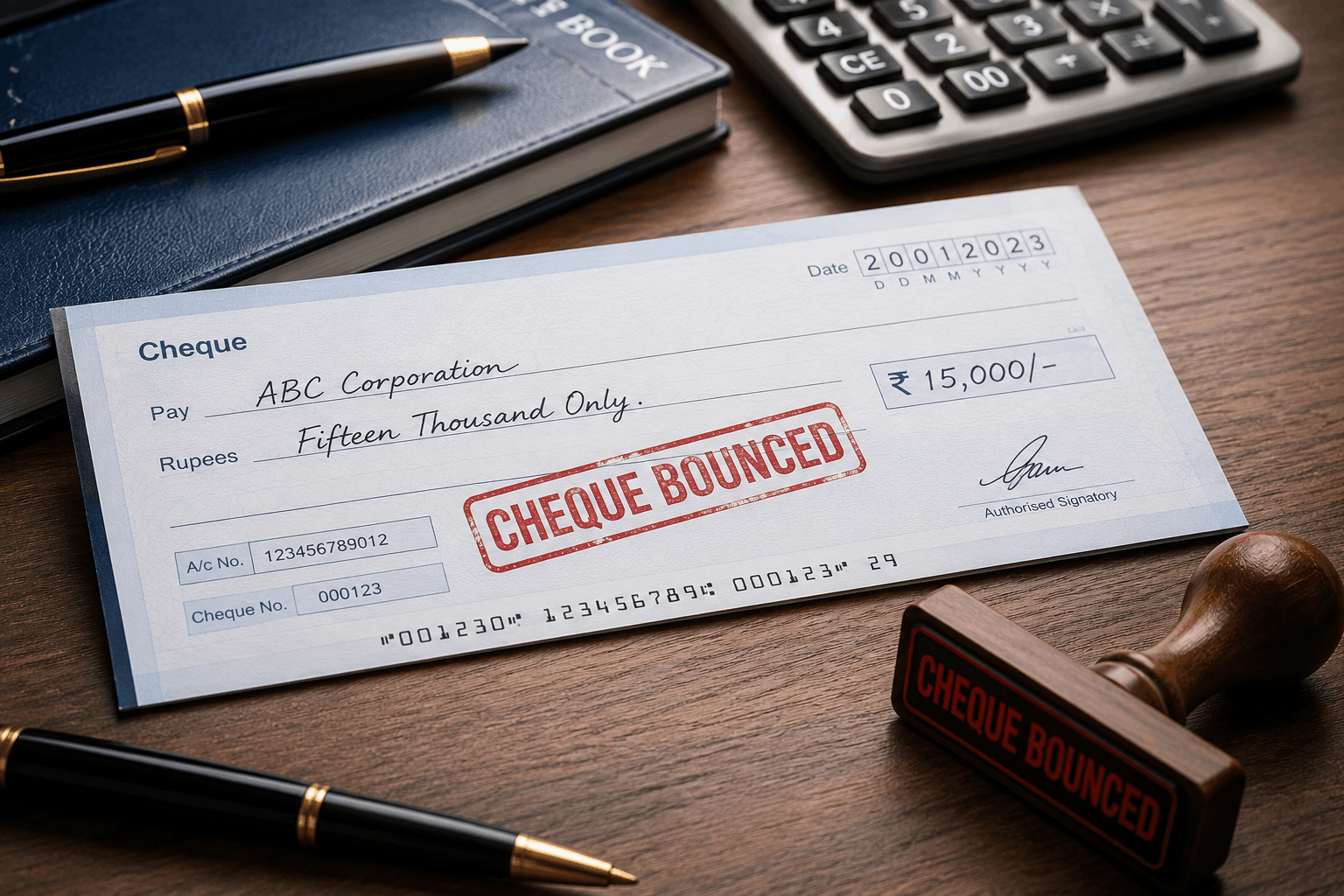
A cheque bounce occurs when a bank refuses to honour a cheque issued to you due to reasons like:
- Insufficient funds in the drawer’s account
- Signature mismatch
- Account closure
- Post-dated or stale cheque
Under Section 138 of the Negotiable Instruments Act, 1881, issuing a cheque without sufficient funds is a criminal offence. The law empowers the payee to recover the amount and, in certain cases, claim damages.
Step 1: Verify the Cheque Bounce
Before taking legal action, ensure that the cheque has indeed bounced:
- Receive a Cheque Return Memo (CRN) from the bank confirming the bounce reason.
- Check if the amount, signature, and date are correct.
- Maintain all transaction records for reference during legal proceedings.
Verifying the bounce prevents unnecessary disputes and strengthens your case.
Step 2: Issue a Legal Notice
Once you confirm the cheque bounce, the next step is to issue a legal notice to the drawer. This notice serves as a formal demand for payment.
Key Points of the Legal Notice:
- Must be issued within 30 days from the cheque bounce date.
- Should mention cheque number, date, bank details, and amount.
- Request the drawer to pay the cheque amount within 15 days of receiving the notice.
Sending this notice is mandatory before filing a criminal complaint under Section 138 IPC. Professional legal assistance is recommended to draft a notice that is clear, precise, and legally valid.
Step 3: Filing a Complaint in Court
If the drawer fails to respond within the stipulated 15 days, you can file a complaint in the competent court. The steps are as follows:
- Prepare a complaint petition including:
- Original cheque
- Bank return memo
- Copy of the legal notice
- Proof of delivery of the notice
- Submit the petition to the Judicial Magistrate’s Court having jurisdiction over the area where the cheque was presented.
- Pay the court fees as prescribed by the state.
Once filed, the court will issue a summons to the drawer and proceed with the hearing.
Step 4: Court Proceedings
During the hearing, both parties present their case. Key points include:
- Evidence Submission: Original cheque, CRN, and legal notice proof.
- Cross-Examination: The drawer may present defenses, such as valid reasons for insufficient funds.
- Settlement Opportunities: The court may encourage an out-of-court settlement.
Possible Court Outcomes:
- Payment of the cheque amount to the payee
- Additional damages for inconvenience or legal costs
- Imprisonment for up to 2 years in severe cases under Section 138 IPC
Having experienced legal counsel increases the likelihood of a successful recovery.
Step 5: Execution of the Court Order
After the court delivers its judgment, the payee can initiate execution proceedings if the drawer fails to comply voluntarily. This may include:
- Attachment of assets
- Bank account garnishment
- Sale of movable or immovable property
Execution ensures that the court order is enforced effectively and your dues are recovered.
Preventive Measures to Avoid Cheque Bounce
While legal remedies exist, prevention is always better. Here are tips for avoiding cheque bounce disputes:
- Verify the drawer’s financial credibility before accepting cheques.
- Encourage post-dated cheques only from trustworthy parties.
- Maintain clear payment agreements in writing.
- Follow up with reminders prior to the cheque presentation date.
By adopting preventive measures, businesses and individuals can minimize financial risks and disputes.
Expert Tips for Safe Cheque Recovery
- Maintain Documentation: Keep all communication, bank statements, and notices in organized records.
- Seek Legal Advice Early: Consulting a lawyer specialized in financial litigation can save time and ensure compliance with legal procedures.
- Timely Action: Delayed response may weaken your claim. Initiate notice and complaint within the legally prescribed timeframe.
- Explore Alternative Dispute Resolution (ADR): Mediation or negotiation may provide faster recovery without prolonged litigation.
Conclusion
Cheque bounce cases can be complex and financially stressful. Understanding your legal rights, following proper procedures, and seeking expert guidance significantly improves your chances of recovering the amount safely and quickly. By acting promptly and systematically, you can protect your financial interests and ensure justice under Indian law.